Foundation Cracks Widening After an Earthquake? What Settling Looks Like
Quick Answer: A foundation crack that appears or widens after an earthquake is usually the result of differential settlement, meaning one section of the foundation has shifted or sunk more than another because the shaking disturbed the soil beneath it unevenly. Thin, vertical cracks under about 1/8 inch that stay the same width over several months are typically cosmetic and tied to normal concrete curing or minor soil adjustment. Cracks that are horizontal, stair-stepped through mortar joints, wider than 1/4 inch, or actively growing point to real movement in the foundation and the soil supporting it. In Alaska, the danger window often opens in spring, when the frozen ground that quietly bridged over quake-loosened soil finally thaws and lets that hidden movement show up as a wider crack, a sticking door, or an uneven floor. Track the crack's width, direction, and behavior over a few weeks before deciding whether it needs monitoring or a professional foundation assessment.
Why Foundation Cracks Can Appear After Earthquakes
The shaking stops. The dust settles. Your house looks fine. Then a few weeks later you notice a hairline crack near a basement window that wasn't there before, or a crack you patched years ago has opened back up. Anyone who's lived through a moderate Alaska earthquake knows this pattern. The visible damage during the event is often minor. The real story plays out underground, in the soil the foundation sits on, over the following weeks and months.
That delay is what makes post-earthquake settling so easy to get wrong. A crack that shows up two months after the shaking gets blamed on normal wear, because who connects a crack in June to a quake back in February? But foundation engineers who inspect buildings after Alaska earthquakes keep landing on the same culprit: differential settlement, meaning one part of the foundation sank more than another because the shaking disturbed the soil unevenly. Here's what to look for, what the different crack patterns actually mean, and how to tell ordinary settling from something that needs attention now.
Why Earthquakes Leave Foundations Settling for Weeks Afterward
Shaking loosens soil that was holding the foundation steady. A foundation doesn't just rest on soil, it depends on that soil staying compacted and stable under the weight of the structure above it. Seismic shaking, even at moderate magnitudes, can loosen or rearrange soil particles beneath and around footings. Where the ground under one corner of the house loosens more than the ground under another, that corner settles a little further than the rest of the foundation. Engineers who inspected buildings after Anchorage's 2018 magnitude 7.1 earthquake identified this uneven, or differential, settlement as the primary cause of the structural cracking and framing damage they found, more so than the shaking itself.
Saturated or poorly draining soils move more than firm, well-drained ground. Soil that holds excess moisture behaves differently under seismic stress than dry, compacted soil. In the most severe cases, saturated soil can liquefy temporarily during an earthquake, briefly acting more like a heavy liquid than solid ground before it resettles. Most residential foundation settling is far less dramatic than true liquefaction, but the underlying principle is the same: wetter, softer soil shifts more, and a foundation sitting on uneven pockets of soft ground is the one most likely to develop new cracks in the weeks that follow.
Alaska's frozen ground can mask damage until it thaws. Frozen soil is rigid. It acts almost like a splint on ground that's already been knocked loose. In the months right after a winter earthquake, a frost layer can bridge over soil that's been disturbed underneath it, holding everything together in a way that hides how much has actually shifted. Once the seasonal thaw softens that frozen layer, the ground beneath it is finally free to settle into wherever the earthquake left it unstable. That's why a foundation can look untouched right after a winter quake and then develop new or widening cracks months later, once spring breakup finishes what the earthquake started.
Reading the Crack: What Normal Settling Looks Like
Vertical, hairline cracks under 1/8 inch. A thin vertical crack in a poured concrete wall, especially one running straight up and down without a step or jog, is usually the least concerning pattern. These typically come from ordinary concrete shrinkage or a small, even settling of the slab and are common even without an earthquake involved. If it stays roughly the same width over several months of watching, it's more likely cosmetic than a sign of active movement.
Cracks that appear near control joints or old repair lines. Concrete is designed to crack in predictable places, at control joints and construction seams, rather than randomly through a wall. A crack that opens along one of these existing lines after an earthquake is often the structure doing what it was built to do: relieving stress at its weakest, most flexible point instead of somewhere more critical.
A crack that stops growing after a short adjustment period. Some settling is expected any time the ground beneath a foundation is disturbed, whether by a quake, heavy construction nearby, or a wet season. If a new crack appears right after the event and then holds steady for a few months of tracking, that pattern usually indicates the soil found a new equilibrium rather than continuing to move.
Reading the Crack: What Structural Settling Looks Like
Horizontal cracks, anywhere on the foundation. Unlike vertical cracks, a horizontal crack running across a foundation wall almost always signals a real problem. It typically means lateral pressure or uneven support is bending the wall rather than the concrete simply shrinking, and it should be treated as a priority regardless of how thin it looks.
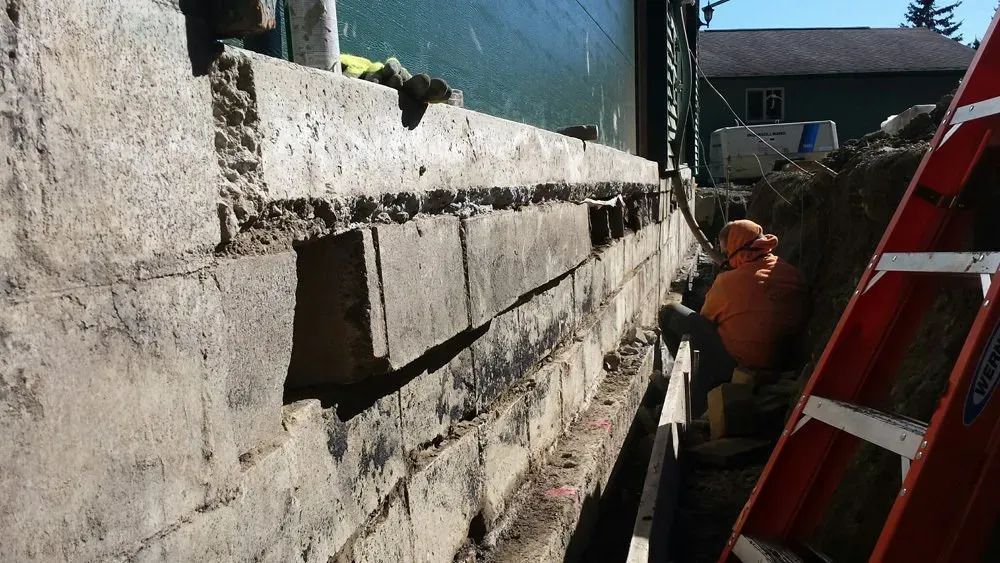
Stair-step cracks through block or brick mortar joints. When a crack zig-zags along the mortar lines of a block or brick foundation instead of running straight, that's the classic signature of differential settlement: one section of the foundation is sinking faster than the section next to it, and the masonry is cracking along its weakest seams as the two sections pull apart.
Cracks wider than 1/4 inch, or ones that keep widening. Width alone isn't the whole story, but a crack that measures more than a quarter inch across, or one you've measured over a few weeks and watched grow, indicates the foundation is still actively moving. That kind of ongoing movement rarely stops on its own and gets more expensive to correct the longer it continues.
Doors and windows that stick, or gaps that weren't there before. Foundation settling doesn't only show up as cracks in concrete. When one corner of a house drops relative to the rest, door and window frames rack out of square, and you'll feel it as sticking doors, windows that won't latch, or new gaps between trim and wall. These symptoms almost always travel together with cracking, and together they're a much stronger signal than a crack by itself.
TIP: Mark the ends of any crack you're watching with a pencil and write the date next to it, then measure the width at its widest point with a ruler or crack gauge. Check it again every few weeks for two to three months. A crack that hasn't moved in that window is behaving very differently than one that's crept wider each time you check, and that record is exactly what a foundation contractor will want to see if you do call one in.
What's Actually Happening Underground
The soil under Anchorage-area foundations varies enormously from lot to lot, and that variation is a big part of why two houses on the same street can come through the same earthquake with very different amounts of cracking. Footings in this region are typically set well below the frost line, often around 42 inches deep or more depending on soil type and whether the structure is heated, specifically so the foundation sits below the zone that freezes and thaws every year. When soil below or around that footing depth loosens or shifts during a quake, the foundation is reacting to conditions well underground, not just to the shaking itself. That's why a crack pattern can't always be explained by looking at the wall alone. What matters is what the soil beneath that section of foundation did during and after the event, and that's exactly what a proper assessment digs into.
WARNING: Don't wait for a crack to become an emergency before addressing it. A foundation that keeps settling unevenly puts ongoing strain on framing, plumbing, and the roofline above it, and the cost of correcting a foundation that has moved for a year is almost always higher than correcting one caught within a few months of the earthquake. If you're seeing horizontal cracking, stair-step patterns, sticking doors, or a crack that's measurably wider than it was last season, treat it as a foundation issue and have it looked at rather than patching the surface and hoping it holds.
How Settling Damage Actually Gets Corrected
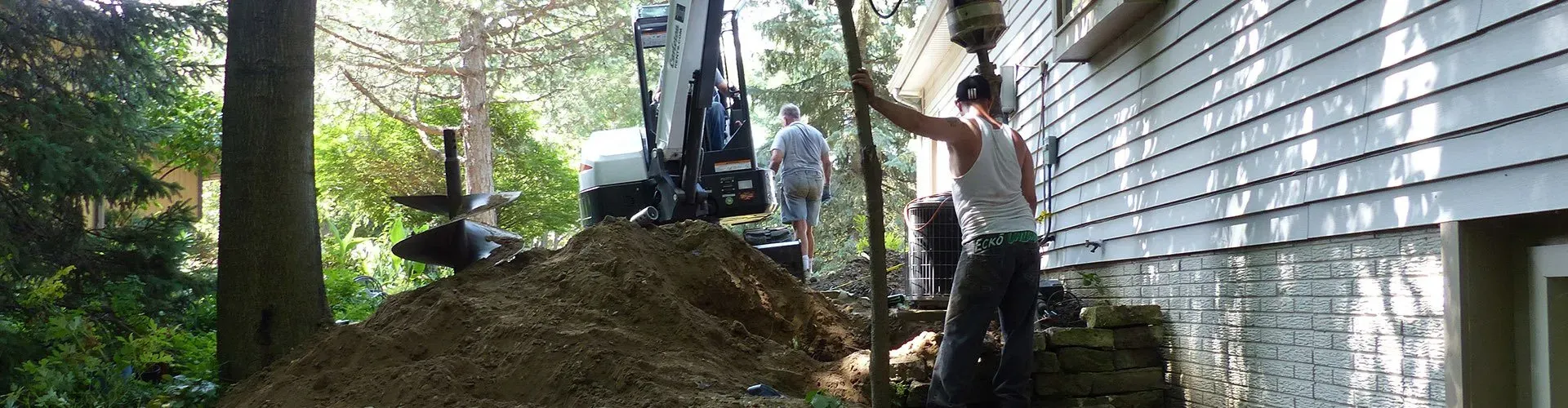
Once a foundation is confirmed to be settling unevenly, the fix has to get underneath the problem instead of covering it up. Patching a crack that's still moving almost never holds. The pressure causing it hasn't gone anywhere. A lasting repair usually means stabilizing the foundation at the soil level, most often with helical piers mechanically driven down past the disturbed, unstable soil until they reach firm, load-bearing ground or bedrock. Once the piers are anchored there, the settled section of foundation can be lifted and leveled and held in place by steel instead of soil that's already proven it can't be trusted. How many piers you need, and how deep they have to go, depends entirely on what the soil under your specific foundation is doing. That's why a site assessment always comes before a repair plan, not after.
Frequently Asked Questions
How long after an earthquake can new foundation cracks show up?
Foundation cracks may appear immediately or develop weeks or months later as disturbed soil settles. In Alaska, frozen ground can delay visible movement until spring thaw reveals underlying settlement damage.
What's the difference between normal settling and a structural problem?
Normal settling usually causes thin, stable vertical cracks. Structural movement may produce horizontal or stair-step cracks, widening gaps, uneven floors, or sticking doors and windows that indicate ongoing foundation movement.
Should I fill a foundation crack myself after an earthquake?
Avoid filling a foundation crack until you know it has stopped moving. Monitor its width for several weeks first, because sealing an actively widening crack will not address underlying soil movement.
Can a foundation settle from an earthquake even if I didn't see cracks right away?
Yes. Disturbed soil can continue settling long after earthquake shaking ends. Cracks, uneven floors, or sticking doors may appear months later, particularly where saturated, poorly drained, or unstable soil continues shifting.
Why does Alaska's spring thaw matter for earthquake-related foundation damage?
Frozen ground can temporarily support earthquake-disturbed soil and conceal settlement. During spring thaw, softened ground can shift further, causing previously minor foundation cracks to widen or entirely new cracks to appear.
How do helical piers fix a settled foundation?
Helical piers extend through unstable soil until reaching firm, load-bearing ground. They stabilize the affected foundation section and may help lift it toward level while transferring structural weight onto dependable support.
What Your Foundation Cracks Reveal Over Time
A foundation crack can reveal how the ground beneath a home responded long after the earthquake ended. Width, direction, surrounding damage, and changes through Alaska’s freeze-thaw cycles help distinguish a minor adjustment from continuing settlement. With 33 years of combined experience across Anchorage, AK and the surrounding areas, AA Dirtwork & Snow Removal understands how local soils, seasonal frost, drainage conditions, and seismic movement can interact beneath residential foundations and influence cracking over time.
The most important detail is whether that movement eventually stabilizes or continues changing from season to season. A narrow crack that remains unchanged tells a different story from one accompanied by uneven floors, sticking doors, or widening masonry joints. Careful monitoring and a proper assessment can clarify what is happening beneath the structure and whether stabilization is necessary. Understanding that pattern keeps the focus on the underlying soil and foundation conditions rather than simply covering a visible crack.